By George E Emanuel
The gifts bestowed upon me and my fellow citizens are beyond measure. Each sunrise over the past 250 years seems to add another reason to be thankful for all it represents.
Recently, we celebrated the 250th Anniversary of the “Shot Heard Round the World” and the battles of Lexington and Concord. As has traditionally been the case, there were reenactments in Lexington and Boston, once again celebrating the occasion.
I am saddened that so many of our Countrymen saw the day pass without notice or acknowledgement. This was concurrent with my appreciation that we had not all forgotten. Many of us paused, and some even offered a brief prayer of thanks to God for the stoic nature of our ancestors.
If not for the Second Amendment, I would not know of the glorious ride of Paul Revere as he charged through the countryside on the back of Brown Beauty, the mare borrowed for the ride. I would not know he had been captured by the British on his way from Lexington to Concord the night before the battles. British officers threatened him, but being a very tough little monkey, he informed them that they were about to be captured as a volley of fire broke the stillness of the night at a local tavern. He was released, but the last he saw of Brown Beauty was her galloping, disappearing into the darkness under a British sergeant.
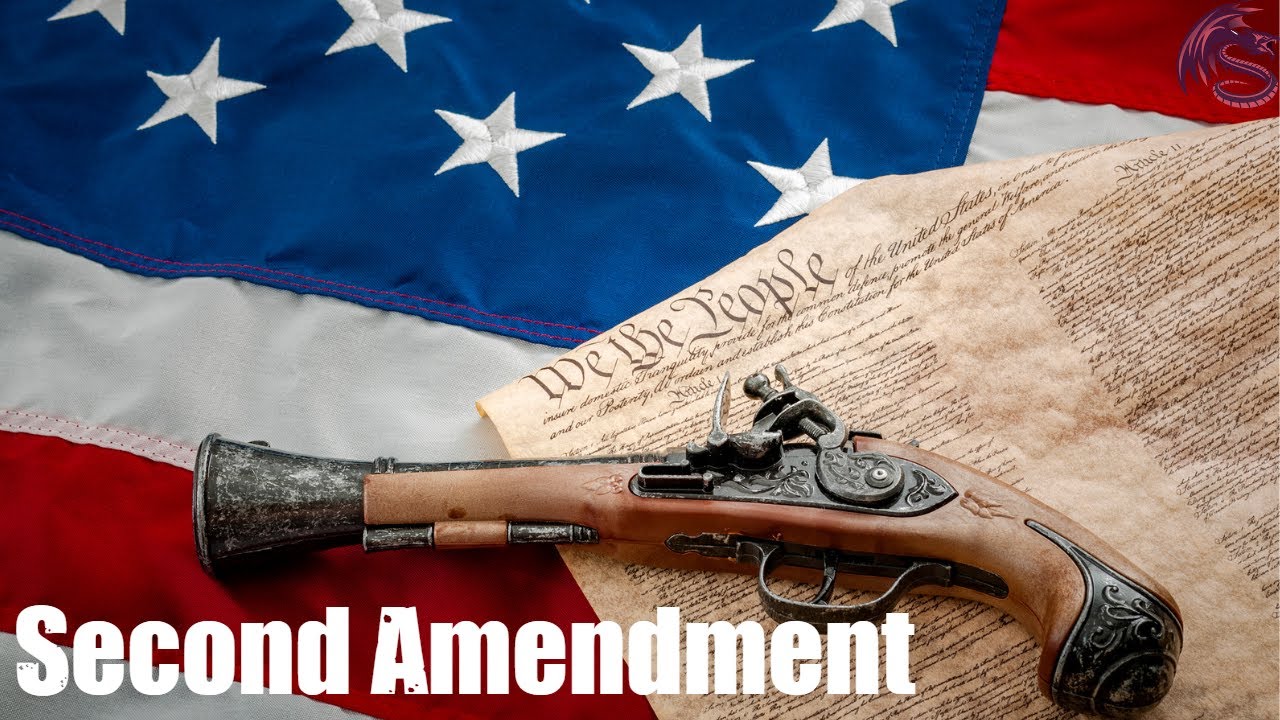
Henry Wadsworth Longfellow, the author of “The Midnight Ride of Paul Revere,” did not honor his forebearer, Peleg Wadsworth, an officer in the Revolution who was present at Lexington and Concord on the side of the rebels. Henry wrote a largely fictitious account of Paul Revere’s Ride, which never seems to get corrected and is now accepted by those who sleep under the canopy of ignorance as fact. It was written to gin up support for the Civil War by reminding people of the patriotism of the Revolution. A political prop is what it truly was. Such is the nature of our modern citizenry, thanks mainly to the educational system, which we have stood idly by and allowed to rot, taking a massive hunk of our heritage along for the ride.
I would not know that Margaret Gage, the American wife of the British Military Governor, was likely the one who tipped the colonists off about the events of April 19th. Her physician, Doctor Joseph Warren, was a confidant, and he had seen her earlier on April 18th.
I would not know of Capt. John Parker. He was the leader of the Militia on Lexington Green. Facing the most powerful army of the day with a mere 70-80 farmers and shopkeepers, they were a strong visual to the British that we were done being pushed around. He ordered his men to hold their fire and remain peaceable, but that “if they mean to have a war, let it begin here,” referring to the invaders of the tiny hamlet.
A shot was fired, reportedly a pistol shot, but it has never been officially attributed to either side, though the British officers were to only ones armed with pistols. Riding on horseback and excited, one likely accidentally fired the shot.
Its net effect was to begin the Revolutionary War, claiming its first eight victims: John Brown, Samuel Hadley, Caleb Harrington, Jonathon Harrington, Robert Munroe, Isaac Muzzey, Asahel Porter, and Jonas Parker of the militia. Obviously, from the names, many were related. The British had one injured, shot in the foot. That soldier would be killed shortly thereafter at Bunker Hill.
I would not know the name of Isaac Davis, the Captain of the Acton Militia, who was one of the first two to die, being shot through the heart at the North Bridge in Concord. His last words to his wife upon leaving for duty were, “Take care of the children.”
I would never have heard of Samuel Whittemore, whose birthday was that fateful day, he was 78 years old and got his musket, French dueling pistols and sword he’d taken from an officer in the French and Indian War “who no longer needed it,” and headed out the door over his wife’s protestations to “kill some British soldiers.” He ended up that day left for dead behind a stone wall, after taking on the Brits by himself, he got a few before being shot in the face with a musket, removing his cheek, after which he was repeatedly bayonetted, reportedly more than a dozen times. He was then left to die. Which he did after another 16 years and several more children fathered. If you can’t tip your hat to Sam, I won’t go there.
Without the Second Amendment, I would not know Timothy Murphy, a Rifleman under Daniel Morgan at the Battle of Saratoga, aka the Second Battle of Bemis Heights. He was likely the single-handed reason we won the war. You see, he shot General Simon Frazer, removing him from the field at a distance of some 300 yards. Then, he dispatched Frazier’s Adjutant at a similar range, leaving the British leaderless and allowing the Colonials to win the day.
That single victory was all it took to win France’s support and convince them we could win. It got them to enter the war and gave us sorely needed support.
Without the Second Amendment, I would never have heard of Washington, Jefferson, Adams, Franklin, Jackson, Lincoln, Lee, Grant, Pershing, Teddy Roosevelt, Alvin York, Audie Murphy, Patton, Halsey, Truman, Eisenhower, Kennedy, Reagan, or any of the thousands of Americans who have become household names since the eight years of darkness which was the American Revolution.
Fortunately, Annie is not the only one who saw the sun come out tomorrow; we, too, can say that it did.
But we must also be vigilant as it sets, as it has on many over the ages.
So why am I thankful to the Second Amendment? Why do I give it so much credit and importance? It would be easy to ignore its significance except for our history and heritage.
The impetus that lit the powder keg at Lexington and Concord was the final insult before the formation of our great Country.
Up until that time, we had suffered all of the iniquities King George and the Parliament could send to us from across the sea. They took our free press, government, and assembly rights. They arrested us and sent us off to England for trial. They searched simply because they could. They took every one of what we would later define as our “Inalienable Rights,” as Jefferson so eloquently wrote.
I am grateful for and enlightened by the Amendment because all I have spoken of would likely have escaped my notice without it. Or perhaps never recorded at all.
Perhaps its significance is lost on anti-gunners because we have failed to educate them properly, which goes back to the education system.
The events at Lexington and Concord resulted from an ongoing “powder raid” by the British.
They knew their position was untenable and moved in an eighteenth-century version of gun control. They didn’t need the guns if they could seize the powder. They failed, and we won the war. And we only know all the things I mentioned because they have been preserved by “Our Second Amendment.”
Do you think that we would have survived as a nation without the means in the hands of the people to resist tyranny, people who should be skilled in their use? If you do, King George is on the phone; you may take the call in the next room. Never mind that the room is padded and the door locked behind you.
The Revolution has never, and likely never will, end so long as there is ignorance all about us mixed with a huge, and unhealthy dose of apathy. Say nothing of the hubris of those who would be our leaders.
The Second Amendment has given me access to the history of a Country that would not have been born, nor the history written.
I like to think of things in simplistic terms, no fluff, no fancy discourses. Just the facts, ma’am, just the facts.
After the war was over, to paraphrase the founders’ intent, they first thanked God (the First Amendment), grabbed their guns, went home, and lived happily ever after (the Second Amendment). Due to their success in applying it, we have never had a single case regarding the Third Amendment in any court at any level in the country since its founding.
Do you know what the Third Amendment says? I’ll bet you don’t, so go look it up.
Hint: Today, we call it a “home invasion,” which we protect ourselves from by a judicious use of the Second Amendment.
We must shift our focus from fighting to keep our rights to educating the ignorant to expand them. The old principle of a good offense IS the best defense is still operative.
At 77, I am not charging too many ramparts, but if a couple of you will push my chair, I’ll show you how it’s done!